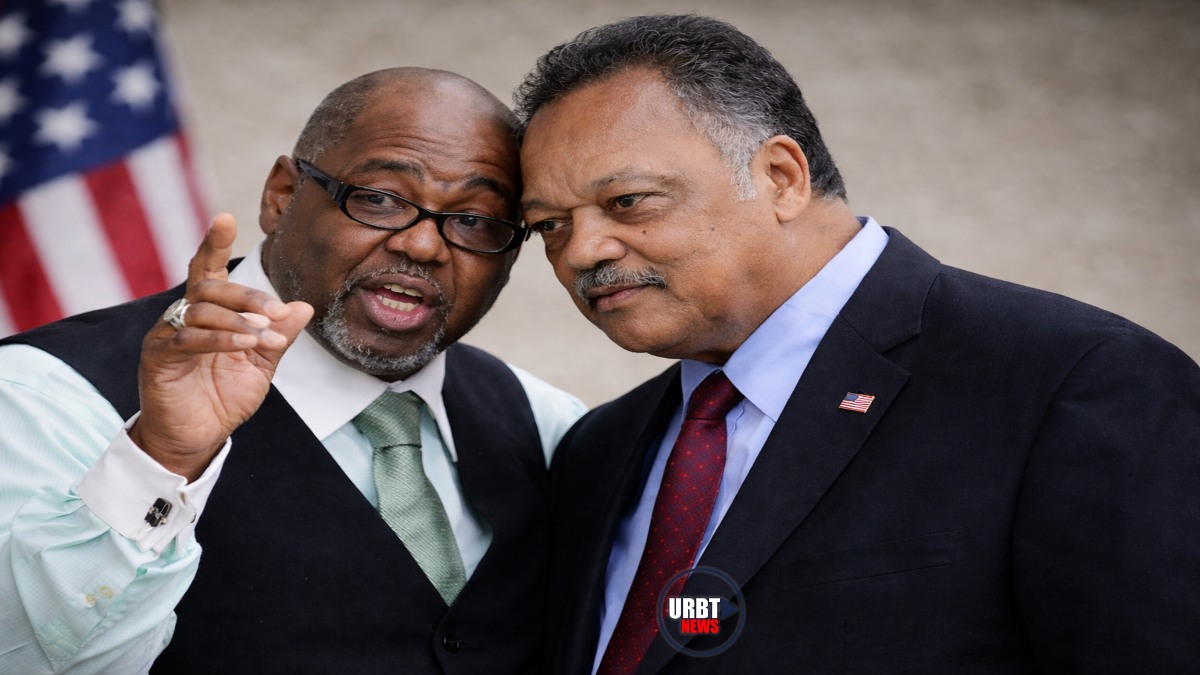
Dr. Daryl D. Green of Langston University urges alumni and professionals during Black History Month 2026 to remove small financial barriers for students.
LANGSTON, OK, UNITED STATES, February 25, 2026 /EINPresswire.com/ — As Black History Month unfolds amid renewed national debate over race and leadership, Dr. Daryl D. Green, Dean of the Langston University School of Business, is urging leaders to move beyond reaction and toward responsibility.
Dr. Green, a business strategist and former federal manager with more than 27 years of leadership experience at the U.S. Department of Energy, now leads one of Oklahoma’s premier HBCU business schools during a period of rising student need and institutional constraint.
Black History Month as a Leadership Test
Dr. Green argues that Black History Month has never been solely about honoring the past. In moments of national strain, he says, it becomes a test of leadership, particularly within the Black middle and professional classes.
According to the Federal Reserve’s 2024 Survey of Consumer Finances, the median wealth gap between White and Black households reached approximately $240,000 in 2022—the largest recorded since data collection began in 1983. While Black educational attainment and professional representation have increased, wealth security has not kept pace. “The Black middle class is larger, more educated, and more visible than ever,” Dr. Green said. “But visibility without mobilization leaves communities exposed when backlash resurfaces.”
Across HBCUs nationwide, alumni giving and local investment often determine whether student debt barriers are temporary setbacks or permanent derailments. HBCU leadership today requires more than representation. It requires reinforcing the institutional foundations that sustain access and opportunity.
Why Personal Philanthropy Matters Now
Dr. Green’s call is rooted in experience. Early in his academic career, while teaching at a predominantly white institution, he recalls reviewing scholarship awards and realizing that none were designated for promising Black business students. “The system wasn’t hostile,” Green said. “It was incomplete. That moment reshaped how I understood leadership.”
Today, as dean of Langston University’s School of Business, he sees the consequences of incompleteness daily. Last semester alone, more than 200 business students carried cumulative institutional debt exceeding $1 million—balances that can block enrollment or graduation over amounts of only a few hundred dollars.
“These are not abstract statistics,” Green said. “They are talented students whose progress is paused over small barriers. Institutional budgets alone cannot resolve every student debt barrier. Alumni giving and consistent local investment are often what restore momentum.” For Green, personal philanthropy is not symbolic. It is structural. It is one of the quiet drivers of institutional resilience at HBCUs nationwide.
Ten Leadership Questions This Moment Demands
Rather than issuing a political statement, Green challenges leaders, particularly professionals, executives, educators, and community builders, to consider ten questions that define responsible leadership during Black History Month 2026:
1. When public controversy resurfaces, do I react or do I reinforce institutions?
2. Where are the structural weaknesses in my community that remain unaddressed?
3. Have I mistaken visibility for measurable impact?
4. What systems am I strengthening that will outlast the current news cycle?
5. Am I investing time and expertise into solutions or only commentary?
6. What talent is being delayed because barriers remain in place?
7. If external conditions shift tomorrow, what local infrastructure is ready?
8. Do I measure my leadership by attention or by outcomes?
9. Am I building leaders or simply building my profile?
10. When this period is studied years from now, will I be associated with reaction or reinforcement?
“These questions are intentionally direct,” Dr. Green said. “Periods of public tension reveal whether leadership is symbolic or structural. Real progress is built quietly and sustained consistently.”
A Call to Reinforcement, Not Retreat
Dr. Green emphasizes that this is not a call for billionaire philanthropy or symbolic gestures. Instead, he points to consistent, middle-class personal philanthropy as the quiet infrastructure that has historically sustained Black institutions during periods of resistance.
“When divisive content circulates publicly, it can shift attention away from long-term progress,” Green said. “Sustainable advancement does not come from reaction alone. It comes from deliberate, consistent investment in people and institutions.”
As Black History Month 2026 continues, Dr. Green believes the lasting impact of this moment will not be determined by what trends online, but by how communities strengthen opportunity in advance. “History tends to remember those who built durable systems,” he said, “especially during periods of uncertainty. Progress that lasts is intentional.”
Few academic institutions can offer this depth of expertise from a single campus. Langston University provides producers with credible, community-rooted voices who combine scholarship, lived experience, and practical insight.
For media inquiries or to schedule interviews with Dean Dr. Daryl D. Green, please get in touch with the
Langston University Public Relations Office
Phone: (405) 466-6049
Email: emelero@langston.edu
ABOUT LANGSTON UNIVERSITY SCHOOL OF BUSINESS:
Langston University, located in Langston, Oklahoma, is the state’s only historically Black college and home to a nationally accredited School of Business. LUSB has earned national recognition:
• 2023: Ranked among the Best HBCU Programs in Entrepreneurship by BestColleges.com.
• 2024: Named one of the Top 40 HBCU Business Schools in the nation (39 out of 89).
• 2025: Celebrated as a Top 1% performer nationally on the Peregrine business exam, with graduating seniors surpassing both PWIs and HBCUs in 13 core business areas.
The School of Business is committed to building future leaders through innovative programs, community partnerships, and student-centered learning that drives economic development.
#LangstonStrong #AlumniEngagement #HBCUImpact #LUSB #LegacyToLeadership #LangstonUniversity #AlumniPower #TransformingLeadership #LionPride #HBCULegacy
Ellie Melero
Langston University School of Business
email us here
Visit us on social media:
LinkedIn
Facebook
Legal Disclaimer:
EIN Presswire provides this news content “as is” without warranty of any kind. We do not accept any responsibility or liability
for the accuracy, content, images, videos, licenses, completeness, legality, or reliability of the information contained in this
article. If you have any complaints or copyright issues related to this article, kindly contact the author above.